
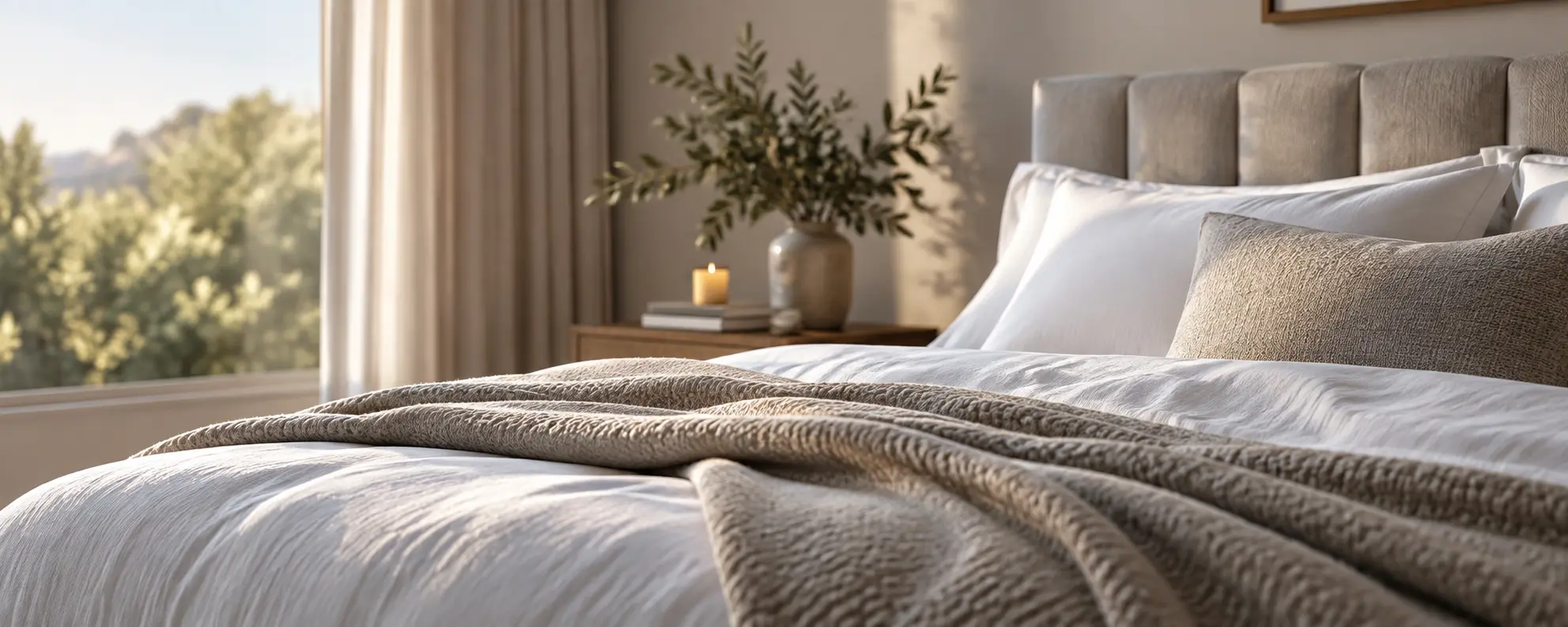
The best mattress isn’t the one with the biggest spring count
Choosing a mattress can quickly become confusing. Pocket springs, memory foam, natural fillings, firmness ratings and endless specifications can make it feel more complicated than it needs to be.
The best place to start is not with a product specification. It is with you: how you sleep, the level of support you need, the feel you find comfortable and what you want from your mattress night after night. This guide will help you to understand the basic rules in what to look for in your search to find which mattress is right for you.
How do you sleep?
Your usual sleeping position can help narrow down the type of comfort and support that may suit you best.
Comfort around the shoulders and hips
Side sleepers often prefer a mattress that cushions pressure points while still keeping the spine comfortably supported.
Balanced support
Back sleepers usually benefit from a mattress that supports the natural curve of the spine without feeling excessively hard.
Firmer, more stable support
Front sleepers often need a slightly firmer feel to help stop the hips sinking too deeply into the mattress.
A versatile feel
If you move between several positions, a medium or medium-firm mattress can often provide the best compromise between cushioning and support.
What does mattress firmness actually mean?
Firmness describes how a mattress feels when you lie on it. It is not the same thing as support. A well-made softer mattress can still support you properly, while an extremely firm mattress is not automatically better for your back.
Your body weight, sleeping position and personal preference all affect how firm a mattress feels, which is why firmness ratings should always be treated as a guide rather than a rule.
More cushioning
Balanced comfort
Supportive with some give
Less sink, more resistance
What’s inside the mattress?
Springs provide support, while the layers above them largely determine how a mattress feels. Understanding the basics makes comparing mattresses much easier.
Pocket Springs
Each spring sits in its own fabric pocket and can respond independently to your body. This helps the mattress contour to your shape and can also reduce movement travelling across the bed when you share with a partner.
Memory Foam
Memory foam moulds around the body and can provide excellent pressure relief. Some people love the enveloping sensation, while others prefer a mattress with a little more bounce and easier movement.
Natural Fillings
Materials such as wool, cotton, silk and cashmere are used to create comfortable, breathable layers. Different combinations can change the softness, resilience and overall feel of the mattress.
Latex
Latex provides cushioning with a naturally responsive feel. It springs back quickly rather than slowly moulding around you, making it a good option if you like pressure relief without the deeper sinking sensation of memory foam.
Do you sleep hot?
If you regularly wake up feeling too warm, it is worth thinking about the materials in your mattress as well as how comfortable it feels. Some materials allow heat and moisture to move through the mattress more easily than others.
Natural fibres such as wool and cotton are popular because they are breathable and help manage moisture. Pocket sprung mattresses can also allow air to circulate through the mattress more freely than some dense foam constructions.
Memory foam has a very different feel. Because it moulds closely around the body, some sleepers find it warmer. Modern foams, breathable covers and other design features can help, but if temperature is particularly important to you, it is something worth considering before you buy.
Do you share your bed?
Choosing a mattress for two people can be a little more complicated, especially if you have different body weights, sleeping positions or comfort preferences.
Partner disturbance
If one of you moves around a lot during the night, individually pocketed springs can help reduce movement travelling across the mattress.
Different preferences
If one person prefers a softer feel and the other prefers something firmer, a medium or medium-firm mattress can often be a good compromise.
Size matters
A larger mattress gives both sleepers more room to move without disturbing each other. If your bedroom allows it, moving up a size can make a surprising difference.
The same mattress can feel different
A mattress may feel firmer to a lighter sleeper and softer to a heavier sleeper, which is why both people should be considered when choosing.
If you are buying as a couple, try to judge the mattress together. The right choice is the one that works well for both of you, not just the person who got there first.
Putting it all together – which mattress is right for you?
By now, you should have a much better idea of what mattress is right for you. If you’re still not sure, don’t focus on any one feature in isolation.. Before you start comparing individual mattresses, ask yourself these six simple questions.
There is no single “best mattress”. There is only the mattress that gives you the right combination of comfort and support.
Still not sure which mattress is right for you?
That’s completely normal. Choosing a mattress is personal, and sometimes the easiest way to narrow things down is simply to talk it through with someone who knows what to look for.
Tell the Mattress Medics how you sleep, what you like, what you don’t like and what you’re hoping to improve. We’ll help you make sense of the options without steering you towards something simply because it costs more.
More from Mattress Medics
Practical guides to help you choose the right mattress and sleep more comfortably.


Leave a Reply
You must be logged in to post a comment.